Galleria Umberto
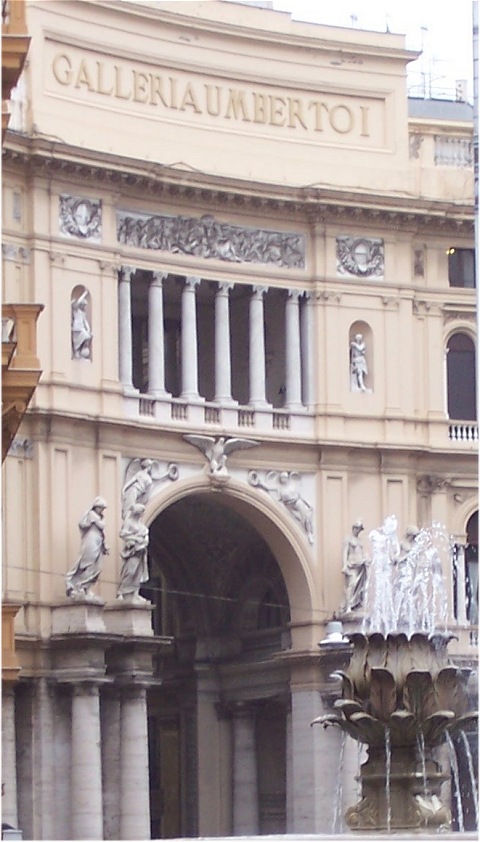
Built in the 19th century, the Galleria Umberto is a must visit. It seems to clearly reflect the Victorian period of history. I often entered the Galleria on this trip, since we stayed nearby in Pizzofalcone on the Monte di Dio behind S.F. di Paola in the heart of the historic center of Naples, even Neapolis.
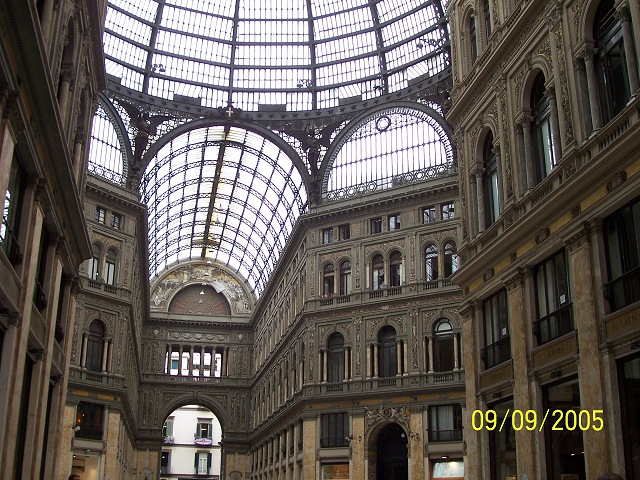
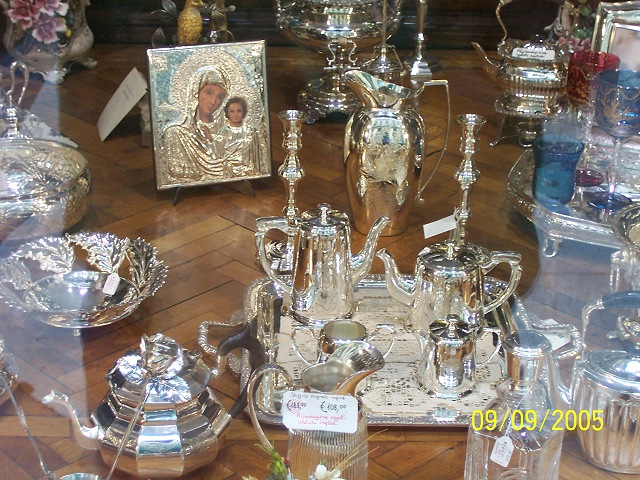
Silver for sale
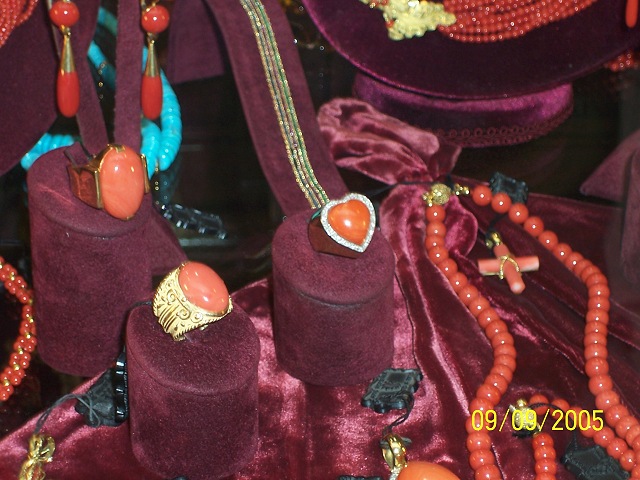
Coral jewelry in the Galleria
As often as I entered, it seemed, I was accosted by a young gypsy girl of no more than five years who was very aggressively soliciting passersby for Euros. Once, I observed her clinging on to a businessman. She stood right in front of him and held onto him, until she had successfully shaken him down for a Euro or two, to her mother's delight. Her mother sat on the ground a distance away, unnoticed by most, observing and begging herself.
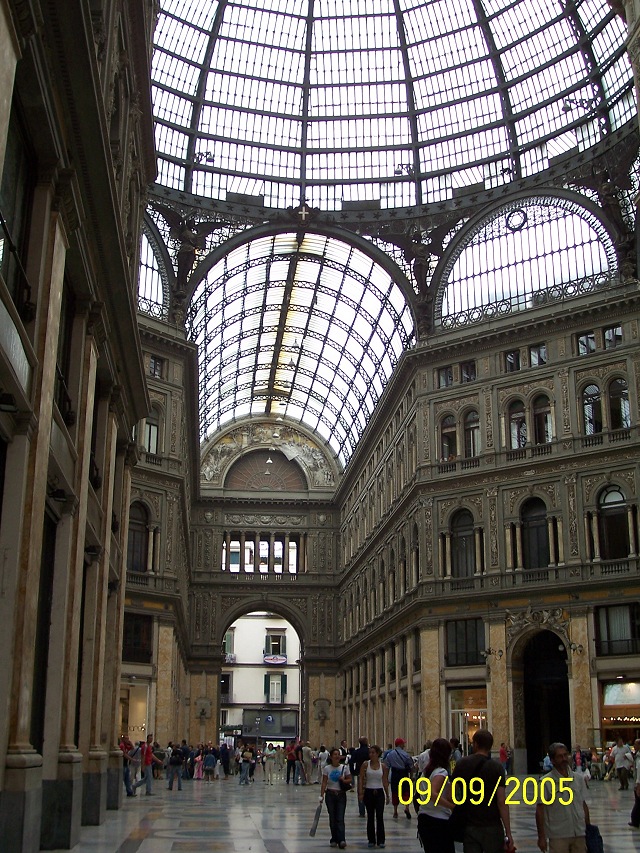
Galleria Patrons
Once successfully past the Gypsy girl, this one particular day, I was then besieged by vendors of "Old Napoli" photographs. Mostly dating from the l9th century and some of them sort of sepia toned, they depict the quasi pre-Industrial Naples that once was, featuring carriages, street urchins, fishermen, and a still smoking and rumbling Vesuvius. The first vendor to approach me began to speak to me in Italian. Many tourists visit the Galleria and they are a key clientele for these vendors. "You're Italian, right?" "No," I replied tersely. I don't know why. I think I was still traumatized by the gypsy girl.
A few moments later, however, a different vendor, of the same merchandize, approached me. I was with Jose'. He asked where we were from. I told him Jose' is a Mexican national who works and resides in Los Angeles and that I am an American, an Italo-American. "My father is Neapolitan," I boasted, trying to fit in. I then bought one of his photos for1 Euro.
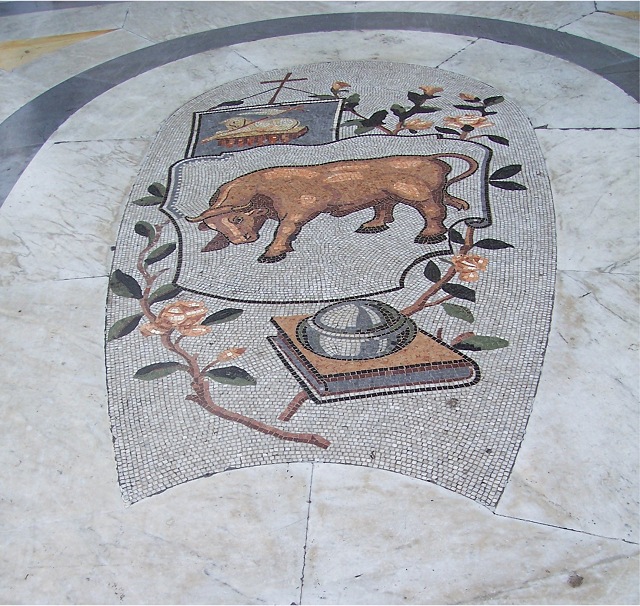
Taurus Mosaic on the Galleria Floor. One of Twelve
Zodiac mosaics.
Before we left, he said, "I have a song for the émigrés." By this, he meant the millions of Italians now living outside Italy. Many, many of these emigrants came from Campania, whose capital is Naples, or they passed through Napoli on their way to relocate somewhere else. In fact, what is known as Italian music and "traditional Italian songs" in America, for example, are actually not even in Italian, but are songs in the Neapolitan language about Naples or Campania. In many cases these same songs are evidence of the nostalgia many of the émigrés felt toward their beloved country of origin, viz., Campania/Naples. The departure of the émigrés left a lasting impression on the Italian psyche. I have seen TV segments treating the topic and of course everyone has a relative in America, Australia, Argentina or somewhere. It has often been interesting for me, while living in Italy, to see Italian immigration as emigration and to see the Italian Diaspora from the Italian side.
Anyway, he began to sing a song in Neapolitan, Chist' Napule, or "This Naples." The song is that of an émigré who remembers with bittersweet words the beauty of his Naples. I was amazed to discover that this 25 or so year old vendor had a beautiful voice and interpreted the song in a truly touching fashion right there in the middle of the Galleria Umberto.
© 1995 and following by Casa di Dino Cardone