|
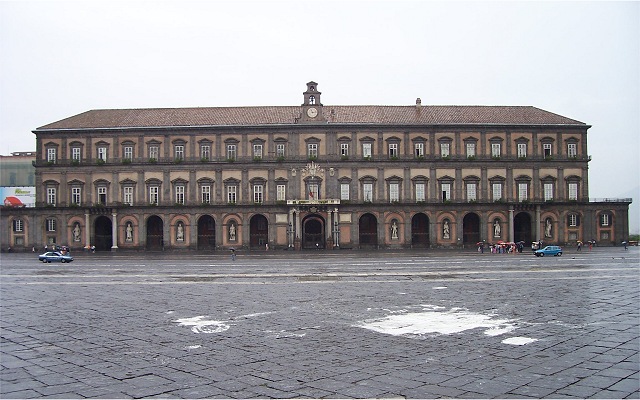
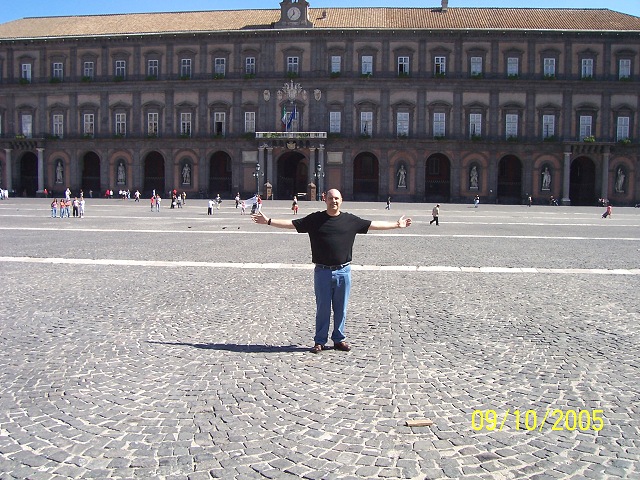
Palazzo Reale Exterior |
|
Palazzo Reale - Le Statue
del Palazzo Reale Below, see the statues that form part of the façade of the building. The statues depict the various individuals collectively known as "I Re di Napoli" or "the Kings of Naples" by the locals. They are known to us as the kings of the Kingdom of the Two Sicilies and/or the Kingdom of Naples known as "Il Regno di Napoli." They ruled all of Southern Italy starting South of the Papal States to Sicily. Vittorio Emanuele, however, was the Savoy King of Italy from 1861-1878. Except for Gioacchino Murat, the kings are from Norman, Hohenstaufen, Anjevin French, Bourbon Spanish, Hapsburg and Savoyan royal houses. I Re di Napoli - The Kings of Naples and Sicily
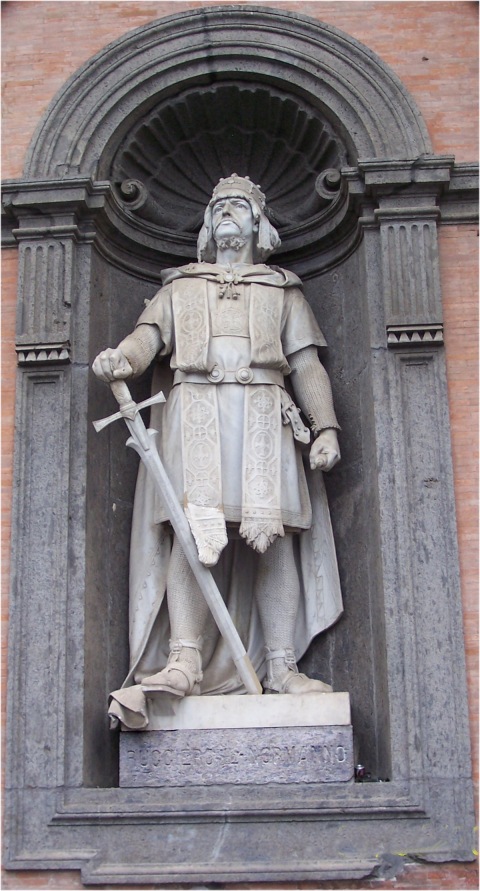
Roger the Norman - Ruggiero Il Normanno One sees a lot of blonds and redheads in Naples and in Sicily. Old Roger and his friends must have been busy! Actually, many Normans settled in Naples and Sicily. He began his rule circa 1130 A.D.
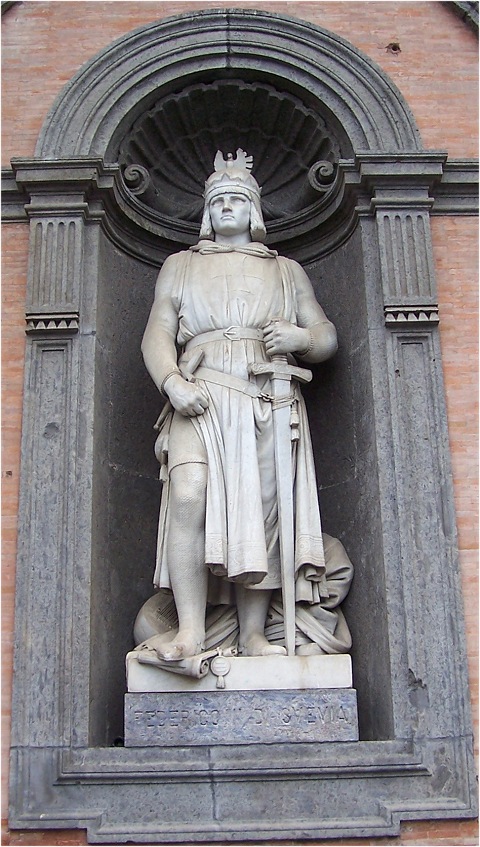
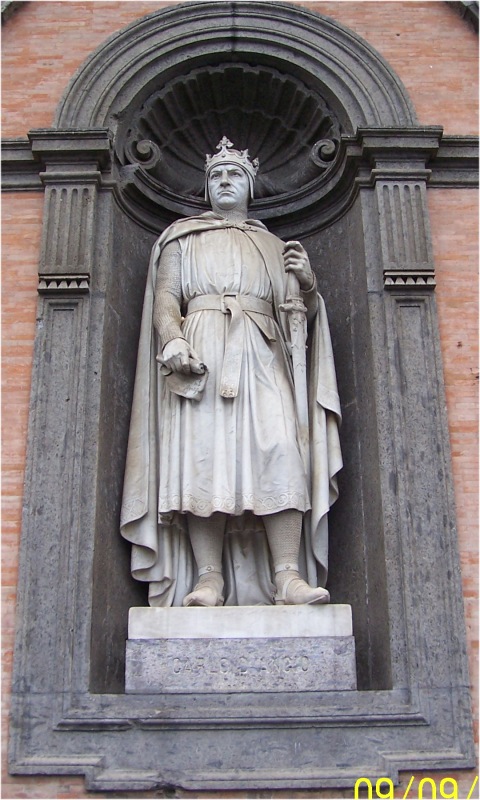
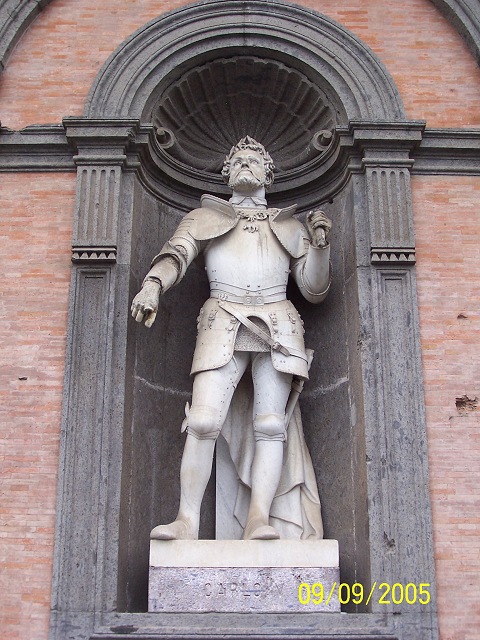
Holy Roman Emperor Fredrick II - Federico di Svevia From the house of Hohenstaufen, Fredrick was king of Germany, Holy Roman Emperor, King of Jerusalem and founder of the University of Naples in 1224 as the first state university in the West. In his time, he was called Stupor Mundi or the "Wonder of the World." He was highly educated and interested in many things. He inherited the Kingdoms of (Northern) Italy, Germany and the Norman kingdom (including Naples and Sicily) from his grandfather Frederick Barbarossa. Although from German royal stock, he was born in Italy in Le Marche at Jesi. He spoke Italian and other Italic languages better than German and is buried in Palermo, Sicily. His castle in Puglia is featured on the one cent Euro. His influence is still felt throughout Southern Italy as the builder of cultural and intellectual institutions. Charles d'Anjou - Carlo d'Angiό "Angió" is "Anjou" to Anglophones. Charles d'Anjou was one of Naples' French Kings. There is a distinct French influence to be heard in the language of Naples and also felt in the Bourbon Royal Patronage of the city. However, in general, the French kings were not as well liked as the Spanish. Pope Urban IV bestowed the Kingdom of the Two Sicilies upon Charles in 1263. More substantive bio of Charles d'Anjou later.
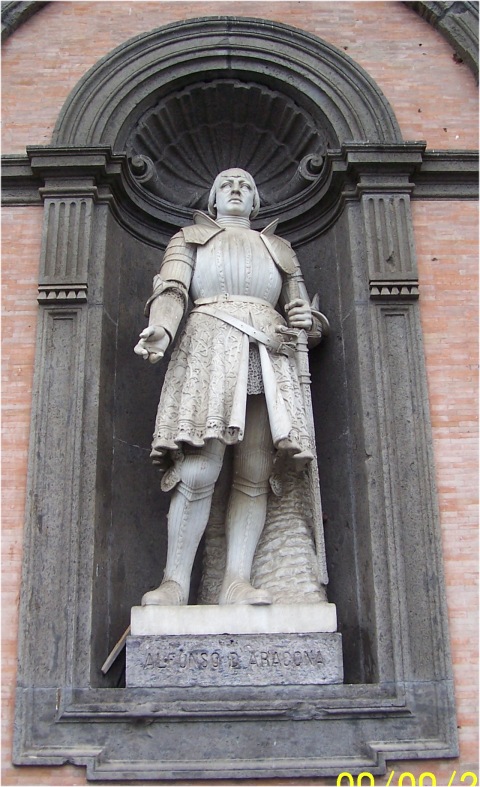
Alphonse of Aragon - Alfonso d'Aragona Called Alphonse "the Magnanimous" he was born in 1396 and died in 1458 at Naples. He came to the throne of Naples in 1443. Charles V - Carlo V A Hapsburg, Carlo V was the King of Spain, Archduke of Austria, and Emperor of the Holy Roman Empire. He lived from 1500-1588. As such, he governed a vast empire on three continents. Thus, in his time, he was the world's most powerful monarch.
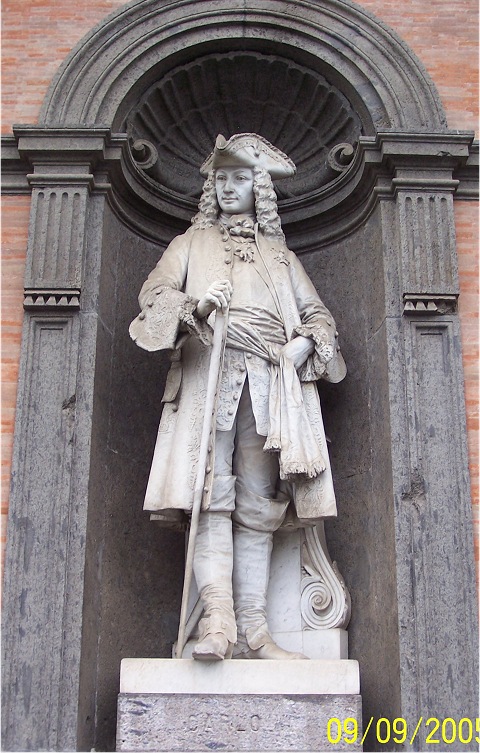
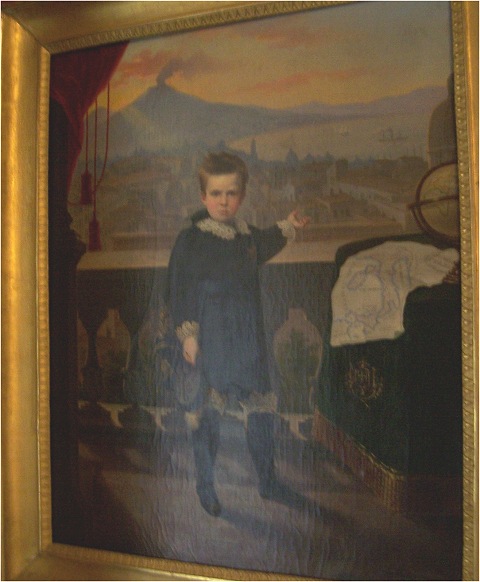
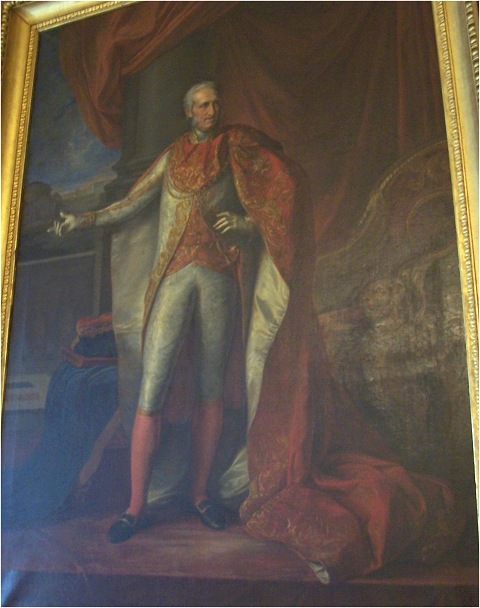
Charles the Bourbon - Carlo Borbone Carlo Borbone was a Reformist Spanish Bourbon King who left Naples and returned to Madrid leaving the Kingdom to his eight year old son Ferdinand (IV), the "Principino" or Little Prince of Naples in 1759. Ferdinand - Ferdinando Il Re Lazzarone Though not depicted by the statues, Ferdinando's reign was among the longest in Europe lasting from 1759-1825. He continued the reformist agenda of his father Charles. He was extremely popular with Neapolitans, being nicknamed "Il Re Lazzarone" (The Rascal King). All Neapolitans are lazzaroni or rascals and hence the title indicates that he was a real Napoletano: Unlike previous kings, Ferdinand spoke Neapolitan, delighted in the local cuisine, including pizza, and was fond of Naples' street life. Except for two brief exiles, he spent his entire life in Naples. He married Maria Carolina of Austria (Hapsburg) the daughter of the Holy Roman Empress and sister of Marie Antoinette of France. They had 18 children!
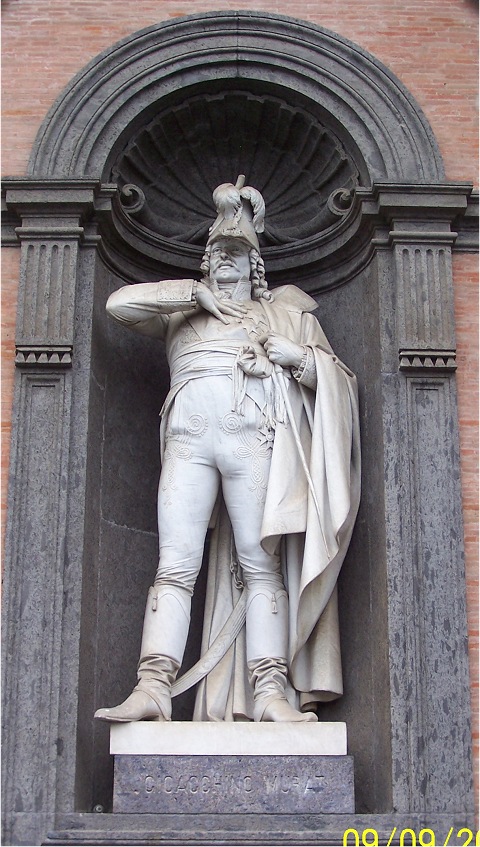
Gioacchino Murat From the time of.. aw hell I read this story. Nice bulge. [Next day] Joaquin Murat was a Frenchman, the son of an innkeeper, who during the Republican and Napoleonic periods rose to the throne of Naples. He married Napoleon's sister Carolina. When Napoleon fell the second time, Murat was apprehended in Calabria and promptly shot. The Bourbons were were back on the throne at least until 1860 with the unification of Italy
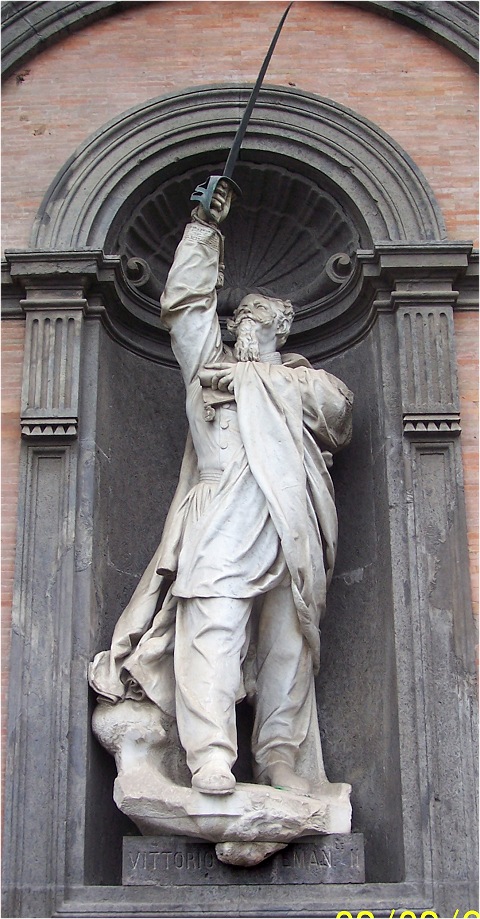
Vittorio Emanuele II
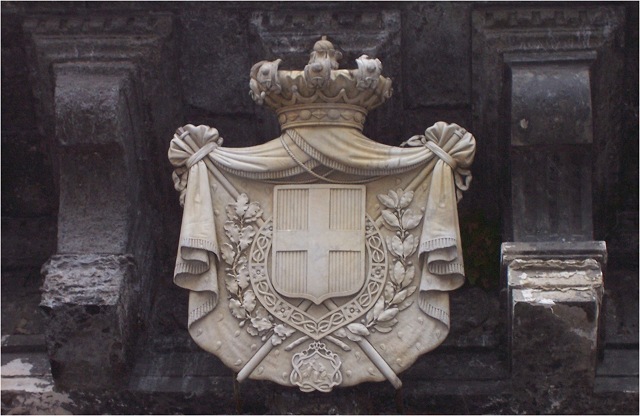
Vittorio Emanuele is a Savoy and the first king of Italy from 1861-1878.
|
|
|
|
© 1995 and following by Casa di Dino |